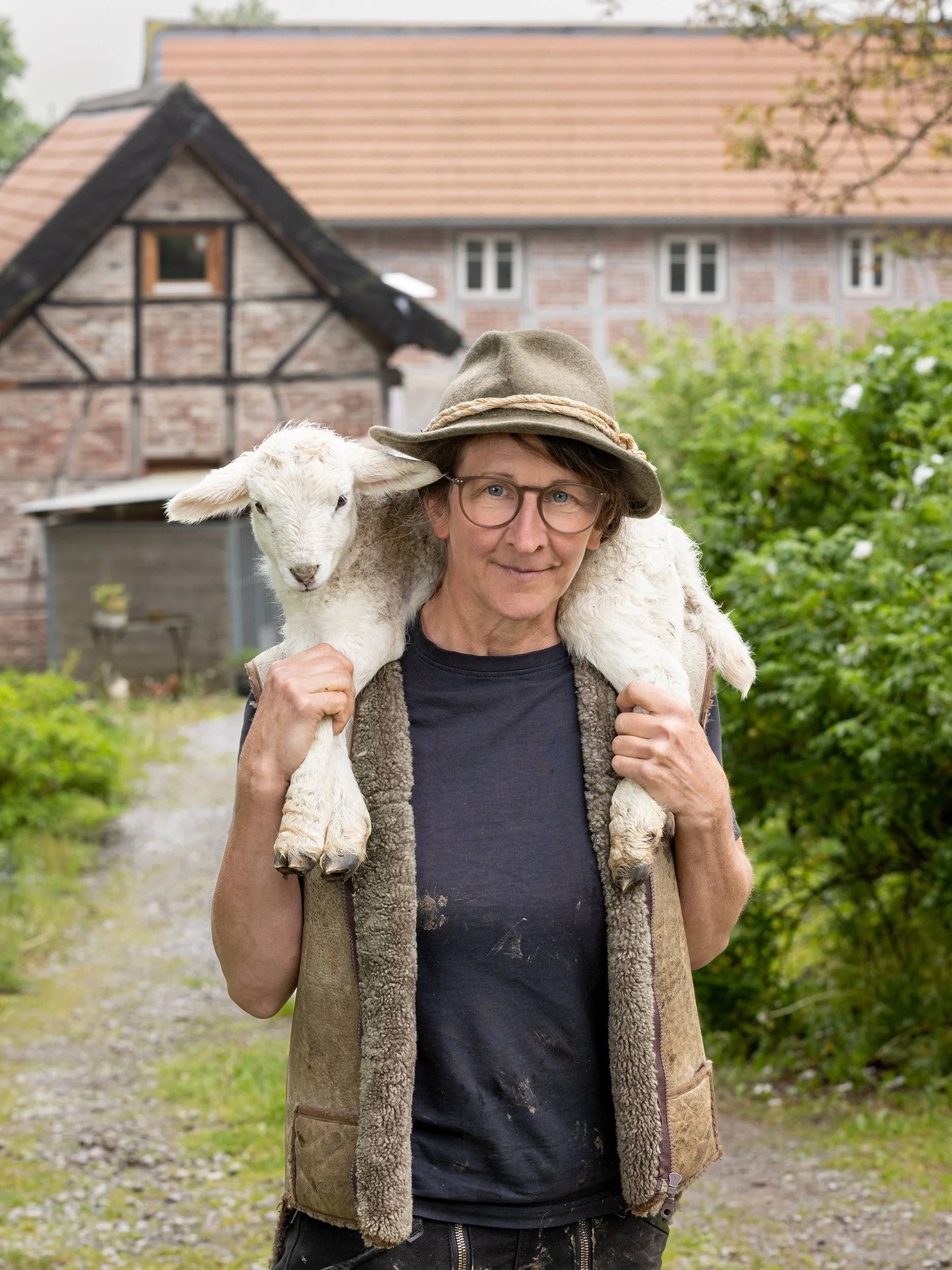
Shepherdess Stefanie with a newborn lamb, 2026.
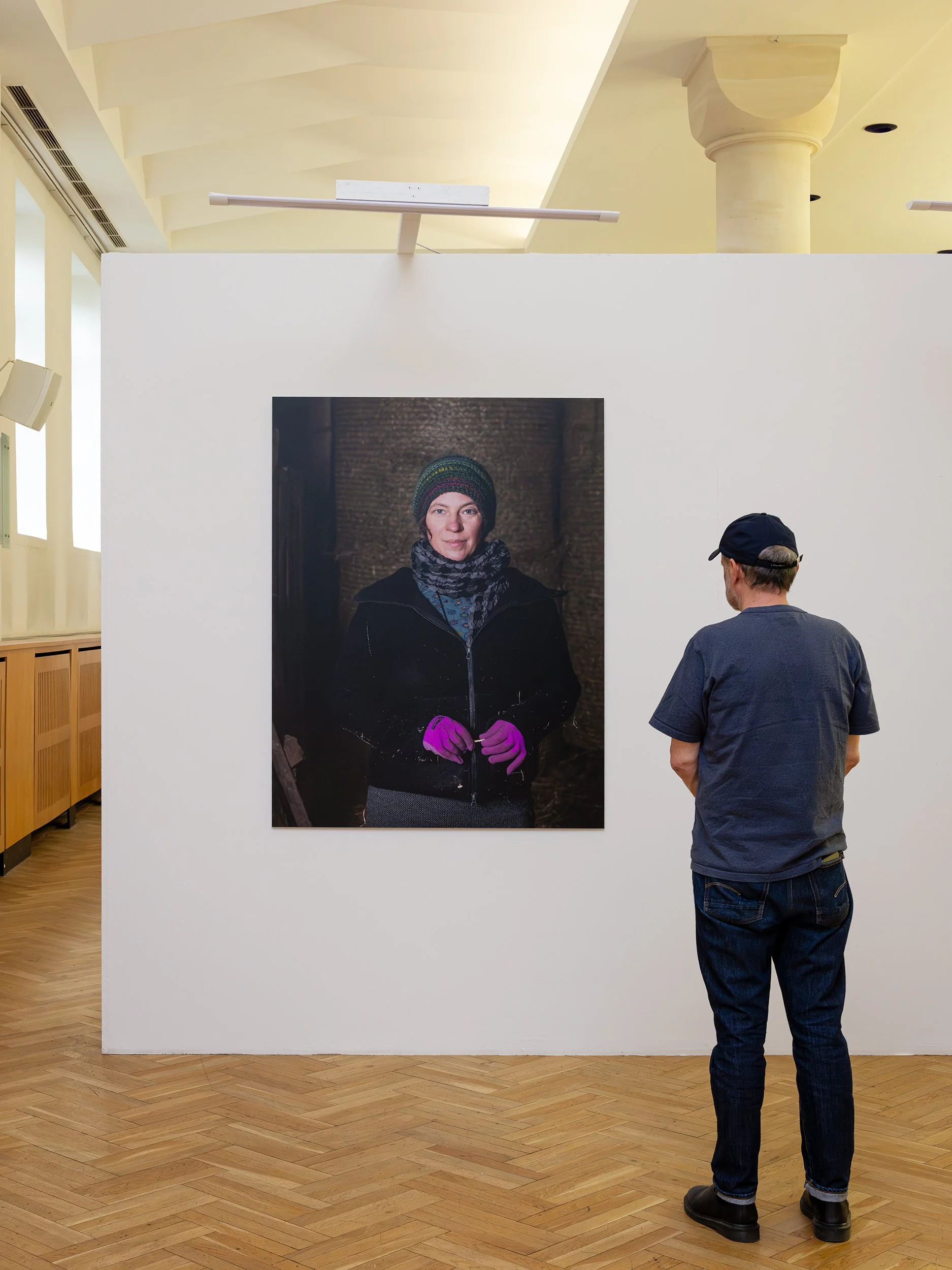
Installation image of ‘Der Hof in ihren Händen’.
Exhibited as part of ‘Zuhause N°8’ at Trudi Kreativ Kathedrale, Essen, Germany
02–17 May 2026
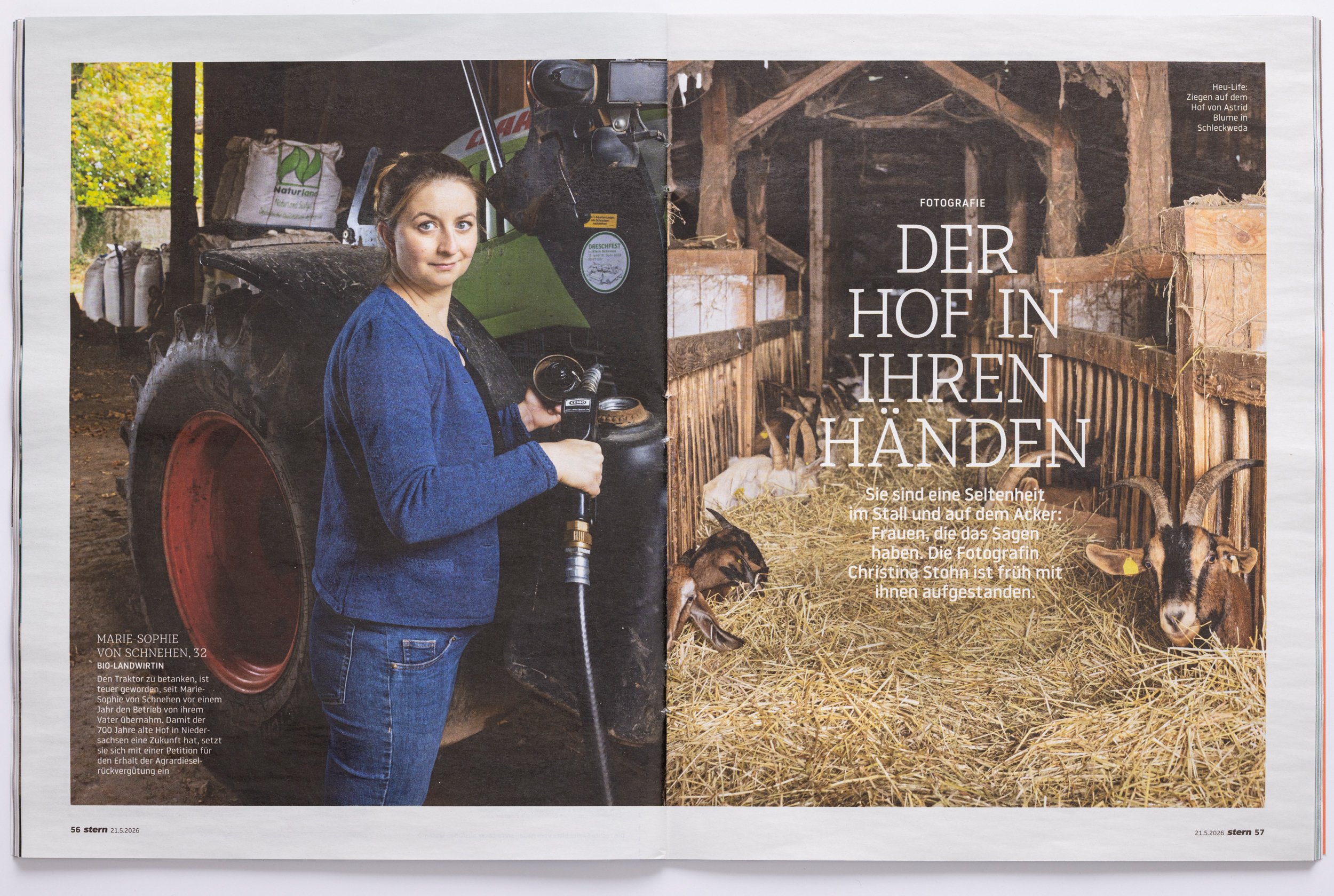
Stern magazine, Issue 21/2026, 10-page feature
View the online feature here
Editor: Amélie Mittelmann, Journalist: Anna Lindemann
Der Hof in ihren Händen (The Farm in Her Hands)
Germany, 2025—Ongoing
What does home signify when residential and working spaces are identical? On family-run agricultural holdings, the farm forms the centre of life across multiple generations, resulting in a deep-rooted sense of belonging, as individuals grow up on the same land that their ancestors cultivated. Yet the conditions under which farms are maintained are evolving.
Climate change and technological developments are transforming agricultural practices, from cultivation and water management to digital monitoring and resource use, while increasing the importance of resilient food provision. This coincides with broader social change, including shifting gender roles and farm succession.
The historical pattern of patriarchal inheritance in Germany meant that farms were passed down along male lines. Despite land being transferred to a growing number of women more recently, traditional role models continue to shape reality, as 35% of the agricultural workforce are women, yet only 11% of them hold leadership positions.*
Responsibility for running the farm alongside family care frequently places women farmers under a dual burden. Arable farming, livestock husbandry and operating machinery are physically demanding, while bureaucracy, administration and marketing shape everyday life. For mothers, years spent combining unpaid domestic with agricultural work can limit independent pension entitlements. Germany’s agricultural pension system links part of retirement provision to the farm, making financial security dependent on ownership or inheritance.
The continuity of individual farms extends beyond their operations, contributing to our food supply and the viability of rural areas. Farming is essential work, yet the contributions of those who sustain it often remain invisible.
*Federal Information Centre for Agriculture, 2025
A detailed portfolio is available on request.